Tour Plan
1
Day 01 - Arrive at Tribhuwan International Airport (TIA) Kathmandu.
Whatever time you arrive at the Tribhuwan International Airport, you will be welcomed by one of our airport representatives. He will help you get transferred to your Hotel. There are no planned activities for the day, so you may check into your Hotel and get rid of jet lag. Tour plans and programs will be provided to you later.
Overnights stay at the Hotel in Kathmandu.
2
Day 02 - Kathmandu Valley Sightseeing Tour
Kathmandu valley Sightseeing tour will start early in the morning. The holy Pashupatinath temple will be our very first visit. Dedicated to Lord Shiva, Pashupatinath is one of the four most important religious sites in Asia for devotees of Shiva. Built in the 5th century and later renovated by Malla kings, the site itself is said to have existed from the beginning of the millennium when a Shiva lingam was discovered here. It lies on the banks of the Bagmati River and is one of the most revered holy sites of the Hindu people. The Pashupatinath is built in the pagoda style architecture and contains many smaller shrines outside the main temple as well. It is also the cremation site of many hindu people and sometimes, it can be observed.
The nest site of the tour is the holy Bouddhanath stupa. The Buddhist stupa of Boudha Stupa dominates the skyline; it is one of the largest unique structure's stupas in the world.The influx of large populations of refugees from Tibet has seen the construction of over 50 Gompas (Tibetan convent) around Bouddhanath. The Stupa is on the ancient trade route from Tibet which enters the Kathmandu Valley by the village of Sankhu in the northeast corner. Tibetan merchants have rested and offered prayers here for many centuries. When refugees entered Nepal from Tibet in the 1950s, many decided to live around Boudhanath. The Stupa is said to entomb the remains of Kassapa Buddha.
The next site, in the tour, is the Kathmandu Durbar Square. It is known as the Hanuman Dhoka Durbar Square, a name derived from a statue of Hanuman, the monkey devotee of Lord Ram, at the entrance of the royal palace. The Durbar at the Durbar square was the royal Nepalese residence until the 19th century and was where important ceremonies, such as the coronation of the Nepalese monarch, took place. The palace is decorated with elaborately-carved wooden windows and panels and houses the King Tribhuwan Memorial Museum and the Mahendra Museum are located here. Time and again the temples and the palaces in the square have gone through reconstruction after being damaged by natural causes or neglect. Presently there are less than ten quadrangles in the square. On 25 April 2015, an earthquake with an estimated magnitude of 7.9 hit the region and severely damaged the Square, reducing several buildings to rubble. The oldest temples in the square are those built by King MahendraMalla (1560–1574). They are the temples of Jaggannath, KotilingeswaraMahadev, Mahendreswara and the Taleju Temple. More and more temples and statues were added to the Square under different ruling kings over the time. It is one of the most architecturally intricate showcases of Nepali art and the unique Newa architecture.
Then finally, the last site of the tour will be the Swayambhunath Stupa- an ancient religious architecture at the top of a hill in the Kathmandu Valley, west of Kathmandu city. Swayambhunath is probably the most sacred among Buddhist pilgrimage sites especially for Tibetans and followers of the Tibetan Buddhism. We were breathless and sweating as we stumbled up the last steep steps and practically fell upon the biggest vajra (thunderbolt scepter) that I have ever seen. Behind this Vajra was the vast, round, white dome of the stupa, like a full solid skirt, at the top of which were two giant Buddha eyes wisely looking out over the peaceful valley which was just beginning to come alive. The complex consists of a stupa, a variety of shrines and temples, some dating back to the Licchavi period.
After visiting each site, we will head back to the Hotel.
Overnights stay at the Hotel in Kathmandu. Breakfast included.
3
Day 03 - Flight Kathmandu-Nepalgunj
We take an early flight to Nepalgunj first. Nepalgunj is a steaming hot in summer and too cold in winter city located in South Western Nepal, in the lowlands of Terai. Indian is just 8 km away from Nepalgunj. Cycle rickshaw, electic rickshaw and horse carts are the main means of transportation. Bageswari temple is one of Nepal’s most important Hindu temples and is worth to visit.
Overnight at hotel, breakfast included.
4
Day 04 - Flight Nepalgunj-Juphal (2475 m), walk to Chhepka (2838 m) Duration: 6 hrs
We take a 35 minutes flight to Juphal from Nepalgunj and fly over steep mountain ridges with beautiful views of snowcapped mountains. Juphal airport is just a gravel airstrip amidst the mountains, which guarantees a spectacular landing. Stepping out of the plane gives the experience of entering in a completely different world.
It is a small mountain village, situated in the midst of the Himalaya. From Juphal you walk down along a small path in fields with wheat and vegetables to the Thuli Bheri River and cross a big iron suspension bridge, the Dhim Bridge (99 m long) which is the entrance to the Shey Phoksundo National Park (SPNP). SPNP is Nepal’s largest National Park, established in 1984, with an area of 3,555 square km
Its aim is to conserve the Trans-Himalayan ecosystem and the Tibetan flora and fauna. In 1998, an area of 1,349 square km surrounding the park was declared as buffer zone which is jointly managed by the park and local communities. (You have to pay 1000 NPR entrance fee, except persons from SAARC countries, who pay 100 NPR). Next to the entrance is the small village of Suligad, where you could stop for tea.
Overnight at tented camp, full board meals included.
The path follows the Suli Khola River now. Behind you, you can see a part of the Dhaulagiri Range. You pass small villages like Kageni (2413 m) and Sangta (2520 m), on the way, where you could stop for tea, lunch or stay for the night. In Sangta honey bee is raised.
It’s a great place for tea with honey! While sipping your tea, you can see the bees going in and out of the beehives that are made from tree trunks. The trail goes through the forest and then along the wild flowing river which, at some parts, is beautiful emerald green.
The path is surrounded by pine trees, like spruce, fir, juniper and cypress and passes small bamboo forests and walnut trees. At the end of the day you reach Chhepka, a small village, surrounded by fields of millet and wheat.
Overnight at tented camp, full board meals included.
5
Day 05 - Chhepka to Chunuwar/Amchi Hospital (3110 m) Duration: 6 hrs
We move through a beautiful pine forests, with some bushes, birches and other varieties. The route follows the river almost all the time moving onflat toups and downs.
At some parts, the valley gets very narrow and steep rock walls are on both sides of you. On the way you encounter local people with their mules or dzopas (crossbreed between yak and cow) loaded with goods to sell. It takes about four hours to pass the village, Rechi where there is a camping spot and at the other side of the bridge, there is a small teashop.
We cross the bridge and the path continues at the other side. It takes two hours to reach Chunuwar. Nearby Chunuwar, you can find the Amchi Hospital butin reality is a clinic looks after by doctor who is educated in traditional Tibetan medicine, and always is a lama (monk). Treatment is so traditional and uses techniques as pulse analysis and urine analysis for diagnosis.
For treatment, Tibetan acupuncture, herbal and mineral medicines are used. In this hospital, you can see a collection of herbs and minerals as medicines. Most Dolpa people prefer to visit the Amchi when they are ill. A donation is highly welcomed to keep this tradition alive.
Overnight at tented camp, full board meals included.
6
Day 06 - Trek to Ringmo/Phoksundo Lake (3733 m) Duration: 3 hrs
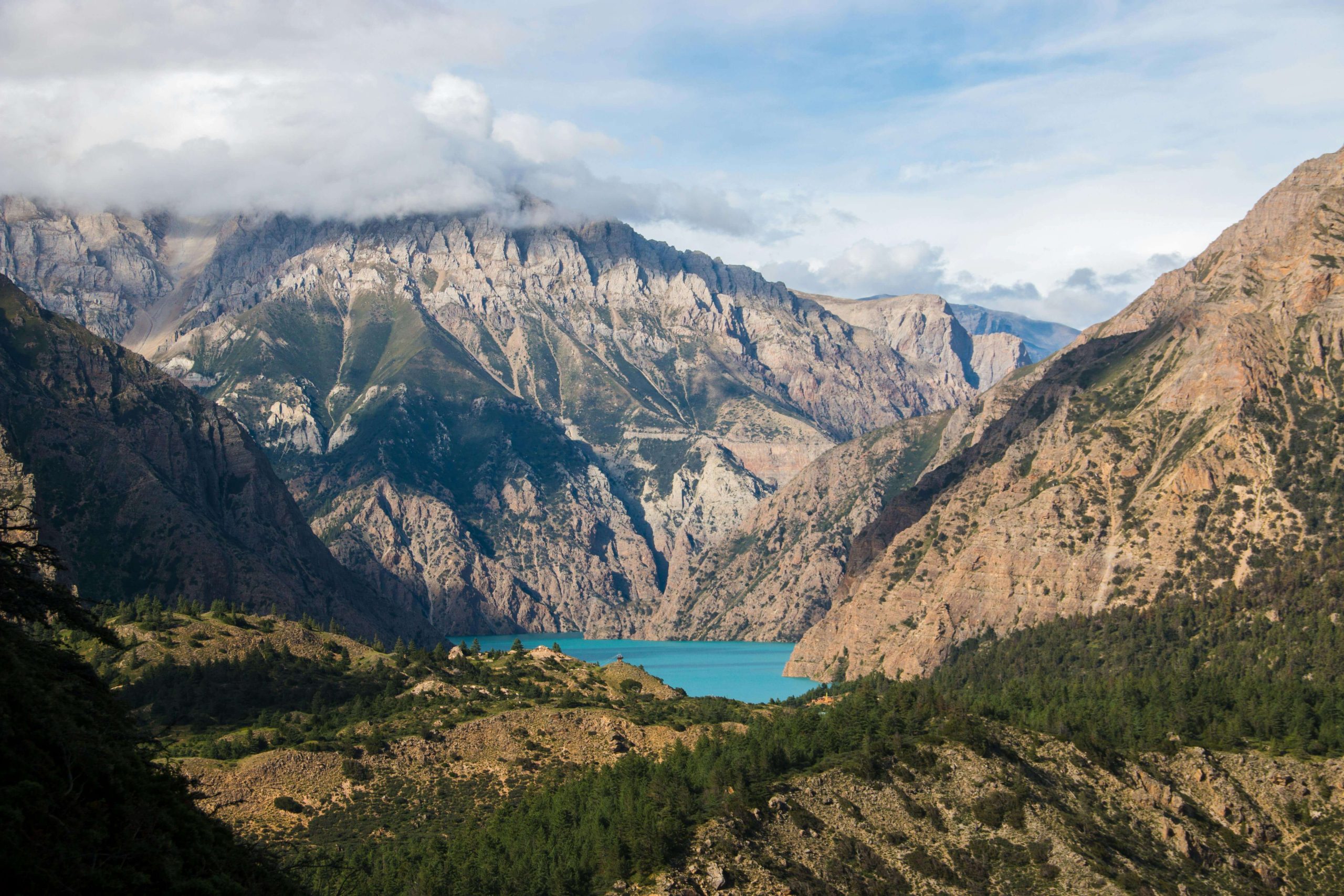
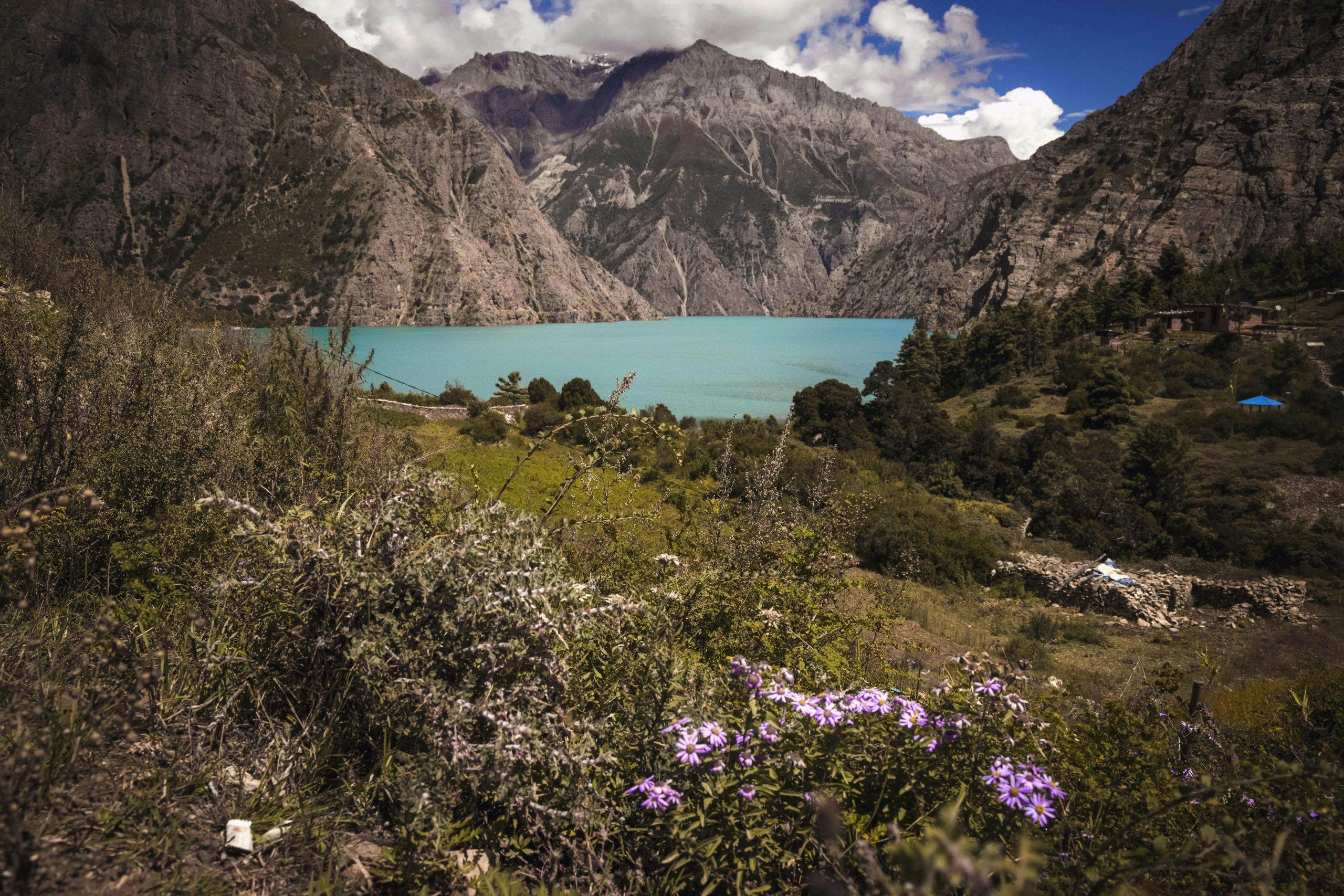
We make a short hike to Ringmo and Phoksundo Lake today. It takes about two hrs moving up and down. You can see Nepal’s highest waterfall, a spectacular waterfall of 167 meters high, the Phoksundo Waterfall (also called Suligad Waterfall). From the pass you have first view of the Phoksundo Lake.
The trail moves down till we reach the river and then follow until we reach Ringmo, a charming village where people practice the Bonpo religion. Bonpo is related to Pre Buddhism which goes thousands of years back. It is a Tibetan religion, which self-identifies as distinct from Tibetan Buddhism, although it shares the same overall teachings and terminology. This religion was founded more than 18,000 years ago by Buddha Tonpa Shenrab Miwo. It is believed that Dolpa used to be the centre of the Bon kingdom, called Zhang Zhung, a big and powerful kingdom then in Western, Northwestern Tibet and surroundings, as in Dolpa you can still find a big concentration of Bonpo practioners. In the 7th Century, Zhang Zhung was defeated by the Buddhist king of Tibet, and Bonpo disappeared almost completely. However many Bon traditions could be seen in Tibetan culture.
Overnight at tented camp, full board meals included.
7
Day 07 - Ringmo/Phoksundo Lake (3733 m), free day
This day is reserved for acclimatization. To some degree, this will help you avoid the feeling of dizziness by adjusting the body to the higher elevations and push off the altitude sickness that might occur in the coming days. We recommend you to stay active even in a rest day as it is better than being idle while on a trekking journey. So we make ourselves busy in Phoksundo Lake, a beautiful lake to watch at.
8
Day 08 - Ringmo/Phoksundo Lake to Chunemba (3639 m) Duration: 5 hrs
Today you enter the restricted area of Inner Dolpo. You follow the famous Demons Trail that was shown in the movie 'Himalaya (Caravan)' by Eric Valli. It is a beautiful movie that shows the life of people in Dolpa. How they use their yaks over difficult passes bearing salt from Tibet to trade with grain from the lowlands.
In the movie, this trail is used during the salt caravan and one of the yaks falls in the lake here. It’s a spectacular trail, moving high above the lake. At some parts, it gets very narrow due to landslides.
It’s now a gradual descend to the lake’s northern shore, which is a good place to take lunch. After this, the trail climbs through a wide valley, crossing some streams and then to an alpine area with junipers, called Chuneba or Lakeside camp, which is a good place to camp. Overnight at tented camp, full board meals included. . You can see a splendid and nearby view of the Kanjirowa Himal (6612 m).
Overnight at tented camp, full board meals included.
9
Day 09 - Chunemba to Snowfields Camp (4400 m) Duration: 7 hrs
The Phoksundo Valley gets quite narrow and we have to walk along the alley with high rock walls on both sides. We cross a couple of streams on the way. And then about half an hour of walk takes us to a narrow gorge leaving the main valley.
Then we climb a long, pretty steep through the steep sided valley. Peter Mathiesson, in his famous book the Snow leopard, has giventhe name of the place Snowfields Camp. It’s at the foot of the pass that will take you into the heart of Inner Dolpo tomorrow.
Overnight at tented camp, full board meals included.
10
Day 10 - Trek to Shey Gompa (4310 m) via Kang La (5375 m) Duration: 6 hrs
Today's trek would be strenuous because of the climb along a dusty path for about two and half hours to Kang La (5350 m). Local people call Ngadra La. Prayer flags and cairns mark the pass. And then we descend to a difficult path where there is snow almost all the time.
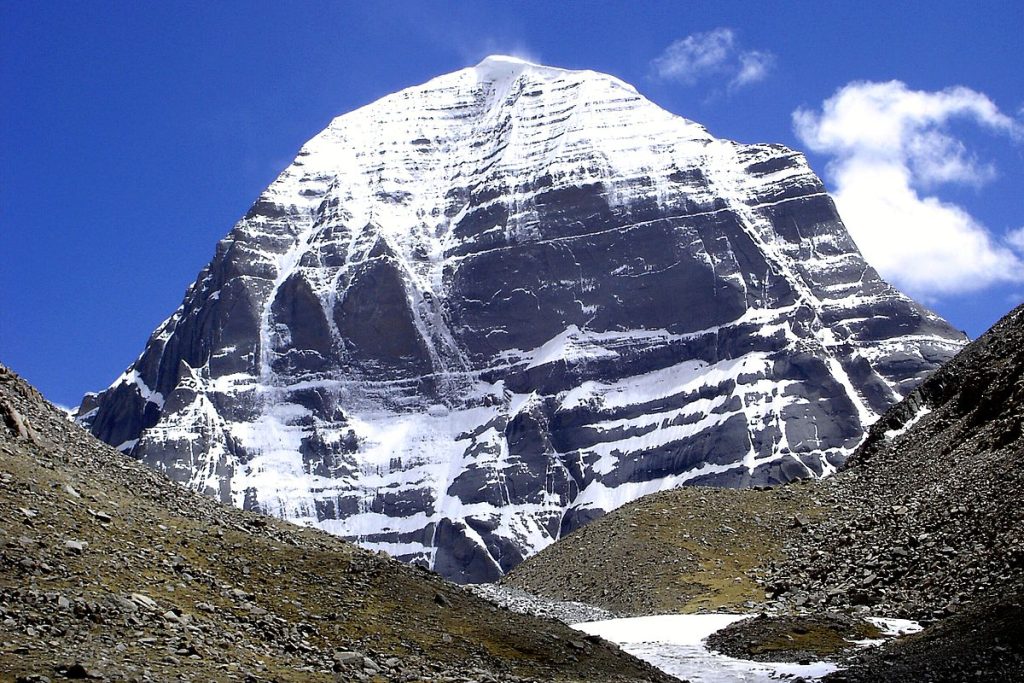
The first 45 minutes we descend which is pretty steep, then three hours of walk leads to Shey Gompa. Shey Gompa is a very small village; with a couple of houses and the gompa (monastery). And then we pass the trail with red and white Chortens and mani walls. The Gompa of the 11th century is located beneath the Crystal Peak on a small grassy plain.It is said to be constructed by a Tibetan Buddhist, who arrived here riding on the back of a flying snow lion. It’s a magical place, and that is why Shey Gompa is often called the spiritual heart of Dolpa.
Every year hundreds of pilgrims visit the gompa and make a kora (clockwise circuit) of the Crystal Peak. It is believed the people living here are descendents of Tibetans, their faces and their dresses too verify it. The women put on dark dresses with colorful aprons made from yak wool. Men wear a long coat, from which they let one sleeve hanging down.
Overnight at tented camp, full board meals included
11
Day 11 - Rest day Shey Gompa (4310 m)
This day is reserved for second acclimatization. We recommend you to stay active even in a rest day as it is better than being idle while on a trekking journey. So we make ourselves busy in visiting Tsakang Gompa (4575 m), a monastery from the Buddhist Kagyupa.
.
If we are lucky enough we may get chance to see flocks of blue sheep and snow leopard in these areas. Many blue sheep live here, as the abbot of Shey Gompa ban on hunting them.
Overnight at tented camp, full board meals included.
12
Day 12 - Shey Gompa to Namgung (4430 m) via Shey La (5000 m) Duration: 6 hrs
Today, we cross another pass - the Shey La, also called as Gelu La (5000 m). The climb to the pass goes through a narrow valley. From the pass you have a good view of the Tibetan Plateau, which is stretching out seemingly endlessly before you.
To the east, you can see Mustang. After the pass, there is a long descend to the pastures of Namgung. You will see big Tibetan tents in the field scattered here and there for the farmers as the fields are too far from the village to do to and fro each day.
The people in Namgung are very friendly and open. A friendly greeting 'Tashi Delek' (Tibetan greeting) is always pronounced with a big smile.
Overnight at tented camp, full board meals included.
13
Day 13 - Namgung to Saldang (4060 m) Duration: 3 hrs
We hike high above the Namgung Khola (River) and then descend steeply to the village of Saldang. It is the largest settlement of Inner-Dolpo. Traditional agricultural is done in this village which is surrounded by fields. Barley, buckwheat and potatoes are the main agricultural products in this barren land. They also depend on yak products (cheese, meat, wool) and trade for their livelihood. The trading of salt for grain and rice is a century old tradition that still prevails in Inner-Dolpo. The people from Saldang are semi-nomadic. Saldang is close to the Tibetan border and some of the salt trade caravans pass through Saldang. In the warm months, they trek in the highlands with their herds of yaks and sheep to carry load. The ones who are better off let the pure nomadic people of Dolpa, the Drokpa, do this work. Sometimes you can see a camp of the Drokpa in these areas.
Overnight at tented camp, full board meals included.
14
Day 14 - Saldang to Sibu (4200 m) Duration: 5 hrs
We have an easy walk to Sibu. We follow the Namgung Khola southwards and pass Namdo village on the way. The villages are surrounded by terraced fields of barley. The path goes along the mani walls, chortens and some Gompa’s. It shows the importance of Buddhism to the people of Inner Dolpo. Buddhism is interwoven in each and every aspect of people’s life so inseparable with them.
Overnight at tented camp, full board meals included.
15
Day 15 - Sibu to Lagmo Che (4570 m) Duration: 4 hrs
The trail starts following the river towards the last village-Raka. And then you enter a large valley where there is chance to watch blue sheep. Besides, you may even come across a snow leopard. After 2 hours of trekking, the path turns away from the river and make a steep climb to a meadow of about 4570 m where yaks are found grazing. This is Lagmo Che, the base camp for climbing to the Jeng La.
Overnight at tented camp, full board meals included.
16
Day 16 - Lagmo Che to Tokyu (4209 m) via Jeng La (5110 m) Duration: 7 hrs
We make a steep climb for about 2 hours to reach the next pass: Jeng La at 5110 m in altitude. From the pass you have a spectacular view of the Dhaulagiri (8167 m) and many other snowcapped mountains. After the pass you descend into the Tarap Valley. From there, we arrive at the village Tokyu (4209), a spread out village, which is believed as the first human settlement after Raka. Tokyu is said to be the highest permanent settlement in the world. We visit the Gompa and a beautiful statue of Maitreya, the Future Buddha.
Overnight at tented camp, full board meals included.
17
Day 17 - Tokyu to Dho Tarap (4080 m) Duration: 2 hrs
Dho Tarap is not very far from Tokyu. On the way, we pass the Cristal Mountain School which is educating children from Dho and surroundings. It is sponsored by a French NGO. It is better to visit the school; the teachers are very pleased to show you around. And at the same time you would get chance to observe the educational system in the area. From the school it takes about half an hour to reach Dho.
At the entrance you pass a beautiful Chorten at the gate. It is believed that the people of Dho are direct descendents of Tibetans. Besides the typical dark dresses with colorful aprons, most Dho women wear bracelets of big shells and some have beautiful silver and turquoise headgear.
Most of the men have long hair, with a red ribbon in their hair, in the style of Tibetan Khampas. Besides they wear the long coat, from which one sleeve is hanging down. The people in Dho are very friendly so it is easy to make friends. Because of the Cristal Mountain School, younger ones can communicate in English.
Dho Tarap, a traditional agricultural village, is surrounded by fields. Yaks are used to plough the land. As in the other villages barley, buckwheat and potatoes are the main crops that can be grown here. But nowadays modern system of agriculture, small greenhouses, promotes the people to grow some green vegetables as well.
Besides the farming, people depend on the yak products and trade. The houses are made up of stones brought from the river valley and are in typical Tibetan style, with small windows and the flat roofs stocked with firewood.
Overnight at tented camp, full board meals included.
18
Day 18 - Dho Tarap to Sisaul (3750 m) Duration: 4 hrs
We explore Dho in the morning. Then we leaving Dho Tarap and come along many mani walls and small Chortens. Following and moving along the Tarap Khola, we step down to green bushy landscape.
Just before arriving at Sisaul, we climb to a small pass. And then pass, the narrow valley making a short descend to Sisaul, which has a good campsite next to a tent-hotel or the next camp a bit further down.
Overnight at tented camp, full board meals included.
19
Day 19 - Sisaul to Laina Odar (3370 m) Duration: 7-8 hrs
Soon after leaving Sisaul, we climb to a small pass with a beautiful Chorten. After the pass we walk in the river valley with high rocks towering above us on both sides.
We would not get chance to see the blue sheep or snow leopard as we leave this place. We walk for about 3 to 3½ hours from Sisaul to Nawarpani and the route is easy here. The path gradually steps down. At some parts the path is beautifully carved out of the rock, this makes you feel that you walking in a kind of three sided tunnel.
After Nawarpani, the trail gets greener and goes through pine forests, with a wonderful fragrance. It’s a fairly easy walk over a pretty large path which sometimes goes very high above the river. You reach Laina Odar where there is a tent-hotel, located at the riverside.
Overnight at tented camp, full board meals included.
20
Day 20 - Laina Odar to Lingdo (2391 m) Duration: 5 hrs
From Laina Odar, the trail goes steep down to Laisicap (2772 m). In some parts, the path goes through forests mostly of spruce, fir, juniper and cypress. Sometimes the river seems far below you.
The walk to Laisicap takes about 3 hours. At Laisicap, we cross Thuli Bheri River via a large suspension bridge of 120 meters in length high above the river. Then we start descending for about 45 minutes. Then flat landscape with greenery makes our walk easy and beautiful.
If you are lucky, you can see groups of large grey monkeys here. The beautiful snowcapped Kang Tokal (6294 m) lures you with its beauty. Getting closer to Lingdo, you can see Sarakot village at a distance, situated on a high cliff.
You pass some mani walls and Chortens. And finally we reach Lingdo. It is a small village with one guesthouse with a camping site. The people who live in this region are Trail’s, a Magar group (who are Buddhist as well).
Overnight at tented camp, full board meals included.
21
Day 21 - Lingdo to Dunai (2140 m) Duration: 5 hrs
Today, we will have an easy walk. The first part of the trail goes through rough landscape. Then carved rocks leads to narrow path. Government is planning to make a motor way to Dho Tarap. Two and a half hours of walk drops you to a small village called Bazar (2427 m). After Bazar, the landscape gets greener and in some places reminds to the European Alps.
At the horizon you can see the snowcapped Kang Tokal (6294 m). The path goes slightly up and down, following the Thuli Bheri River, once and a while passing a couple of houses to our today's destination i.e. Dunai which is the headquarters of Dolpa District. It’s a large village, of about 2.500 people, more or less half Hindu and half Buddhist. Up the hill, there is a Buddhist monastery, the Dolpa Kendriya Gompa, which is worth a visit. It is situated at the slope at the other side of the river.The monastery belongs to the Nyingmapa lineage, the oldest Buddhism linege and was built in 1998. There is only one monk/lama. If he is there, he would be happy to open the monastery for you, explain about it and show you around. Inside the Gompa you can observe a beautiful statue of Sakyamuni Buddha (Gautama Buddha), the Kengyur (the holy scriptures of Buddhism) and big thankas (Buddhist paintings on cotton). There is always Puja (prayer ceremony) from 6-7 am and from 6-7 pm.
Overnight at tented camp, full board meals included.
22
Day 22 - Dunai to Juphal (2475 m) Duration: 4 hrs
It’s a short walk to Juphal. After about 45 minutes you reach a beautiful Chorten (stupa) at the gate which is the entrance to the VDC (Village Development Committee) Dunai. Inside the Chorten you can observe some beautiful Buddhist paintings of mandala’s and important Buddhist figures.
Then we cross over the big iron suspension bridge to get into the Shey Phoksundo National Park. From the bridge, it’s about 2½ – 3 hours to Juphal. We then pass through a small village called Kalagaonda.
Then we leave the main road and catch a small path, through fields of barley and wheat, with walnut, peach and apricot trees. Pretty steep climbing is done to reach Juphal. we pass a Hindu village Dangiwada before we reach Juphal. Juphal is a large village with a small bazaar where it is nice to spend some time looking around.
Overnight at tented camp, full board meals included.
23
Day 23 - Flight Juphal-Nepalgunj-Kathmandu
Early in the morning we fly back to Nepalgunj. Later in the day, we fly back to Kathmandu.
Overnight at the hotel, breakfast included.
24
Day 24 - Leisure day in Kathmandu
This day is reserved for any delays in the Juphal/Nepalgunj flight. Today, you can spend the day as you wish. Shopping or visiting the city’s many restaurants and places of significance can be done.
Overnights stay at the Hotel. Breakfast included
25
Day 25 - Departure
Approximately three hours before your scheduled flight, you will be dropped off at the airport for your departure.
Breakfast included.


 25 Days / 24 Night
 Max People : 1
 Upper Dolpo Trek, Dolpo region