Tour Plan
1
Day 1: Arrive in Kathmandu
As per your arrival at the Tribhuwan International Airport, Kathmandu and one of our representatives will receive you. He will escort you to your hotel where you’ll spend the night. On the first day we’ll provide you the information about the trek.
Overnight at Hotel.
2
Day 2: Explore Kathmandu - Optional Mountain Flight
Today we will have the chance to fly over the Himalaya for one hour to Mt. Everest and return back. This optional early morning excursion offers unforgettable views and the very beginning start, work as a catalyst for further trek. We return back in our hotel, eat breakfast before heading out into the city.
Kathmandu valley Sightseeing tour will start early in the morning. The holy Pashupatinath temple will be our very first visit. Dedicated to Lord Shiva, Pashupatinath is one of the four most important religious sites in Asia for devotees of Shiva. Built in the 5th century and later renovated by Malla kings, the site itself is said to have existed from the beginning of the millennium when a Shiva lingam was discovered here. It lies on the banks of the Bagmati River and is one of the most revered holy sites of the Hindu people. The Pashupatinath is built in the pagoda style architecture and contains many smaller shrines outside the main temple as well. It is also the cremation site of many hindu people and sometimes, it can be observed.
The nest site of the tour is the holy Bouddhanath stupa. The Buddhist stupa of Boudha Stupa dominates the skyline; it is one of the largest unique structure's stupas in the world.The influx of large populations of refugees from Tibet has seen the construction of over 50 Gompas (Tibetan convent) around Bouddhanath. The Stupa is on the ancient trade route from Tibet which enters the Kathmandu Valley by the village of Sankhu in the northeast corner. Tibetan merchants have rested and offered prayers here for many centuries. When refugees entered Nepal from Tibet in the 1950s, many decided to live around Boudhanath. The Stupa is said to entomb the remains of Kassapa Buddha.
The next site, in the tour, is the Kathmandu Durbar Square. It is known as the Hanuman Dhoka Durbar Square, a name derived from a statue of Hanuman, the monkey devotee of Lord Ram, at the entrance of the royal palace. The Durbar at the Durbar square was the royal Nepalese residence until the 19th century and was where important ceremonies, such as the coronation of the Nepalese monarch, took place. The palace is decorated with elaborately-carved wooden windows and panels and houses the King Tribhuwan Memorial Museum and the Mahendra Museum are located here. Time and again the temples and the palaces in the square have gone through reconstruction after being damaged by natural causes or neglect. Presently there are less than ten quadrangles in the square. On 25 April 2015, an earthquake with an estimated magnitude of 7.9 hit the region and severely damaged the Square, reducing several buildings to rubble. The oldest temples in the square are those built by King MahendraMalla (1560–1574). They are the temples of Jaggannath, KotilingeswaraMahadev, Mahendreswara and the Taleju Temple. More and more temples and statues were added to the Square under different ruling kings over the time. It is one of the most architecturally intricate showcases of Nepali art and the unique Newa architecture.
Then finally, the last site of the tour will be the Swayambhunath Stupa- an ancient religious architecture at the top of a hill in the Kathmandu Valley, west of Kathmandu city. Swayambhunath is probably the most sacred among Buddhist pilgrimage sites especially for Tibetans and followers of the Tibetan Buddhism. We were breathless and sweating as we stumbled up the last steep steps and practically fell upon the biggest vajra (thunderbolt scepter) that I have ever seen. Behind this Vajra was the vast, round, white dome of the stupa, like a full solid skirt, at the top of which were two giant Buddha eyes wisely looking out over the peaceful valley which was just beginning to come alive. The complex consists of a stupa, a variety of shrines and temples, some dating back to the Licchavi period.
After visiting each site, we will head back to the Hotel.
Overnights stay at the Hotel in Kathmandu. Breakfast included.
3
Day 3: Drive from Kathmandu to Syabrubesi
The trek to Langtang valley begins with Kathmandu-Syabru Bensi bus ride. The drive takes about half a day and passes Dhunche. While passing along the road at the bank of the Trishuli River, you can catch a glimpse of the Ganesh Himal set against the rice, maize and mustard terrace farms and hills enveloped with green forests. You can also see the terraces carved by men for cultivation. The road from Dhunche to Syabru Bensi gets rough and rocky. Syabru Bensi is a gorgeous little settlement that lies at the bottom of tall green hills. The vast open farms lands in the village roll along the winds and provide a beautiful sight. Old Syabrubesi lies on the eastern bank of the Trishuli Ganga River and is just a 20 minutes’ walk from Syabrubesi.
Overnight Stay at the Guesthouse, Breakfast, lunch and dinner included.
4
Day 4: Trek from Syabrubesi to Lama Hotel
Our main trek starts from here. After breakfast, we head to Bhote Koshi River, cross over Suspension Bridge and then cross Langtang Khola via suspension bridge again. The pleasant flow of the river makes the trek quite refreshing. The trail passes the landslide zone and then towards Bamboo (1960m) and Ramche (2400m). Our journey becomes more exciting from here, the forests and beautiful waterfalls accompany us along the way. There is high chance that we could see animals like Red Panda and Rhesus Monkey. Following the path, we reach at Gumanechok where we stay overnight at Lama Hotel. The Lama Hotel is mainly referred to the whole area in general. There are many guesthouses here.
Overnight Stay at the Guesthouse, Breakfast, lunch and dinner included
5
Day 5: Trek to Mundu via Langtang Village
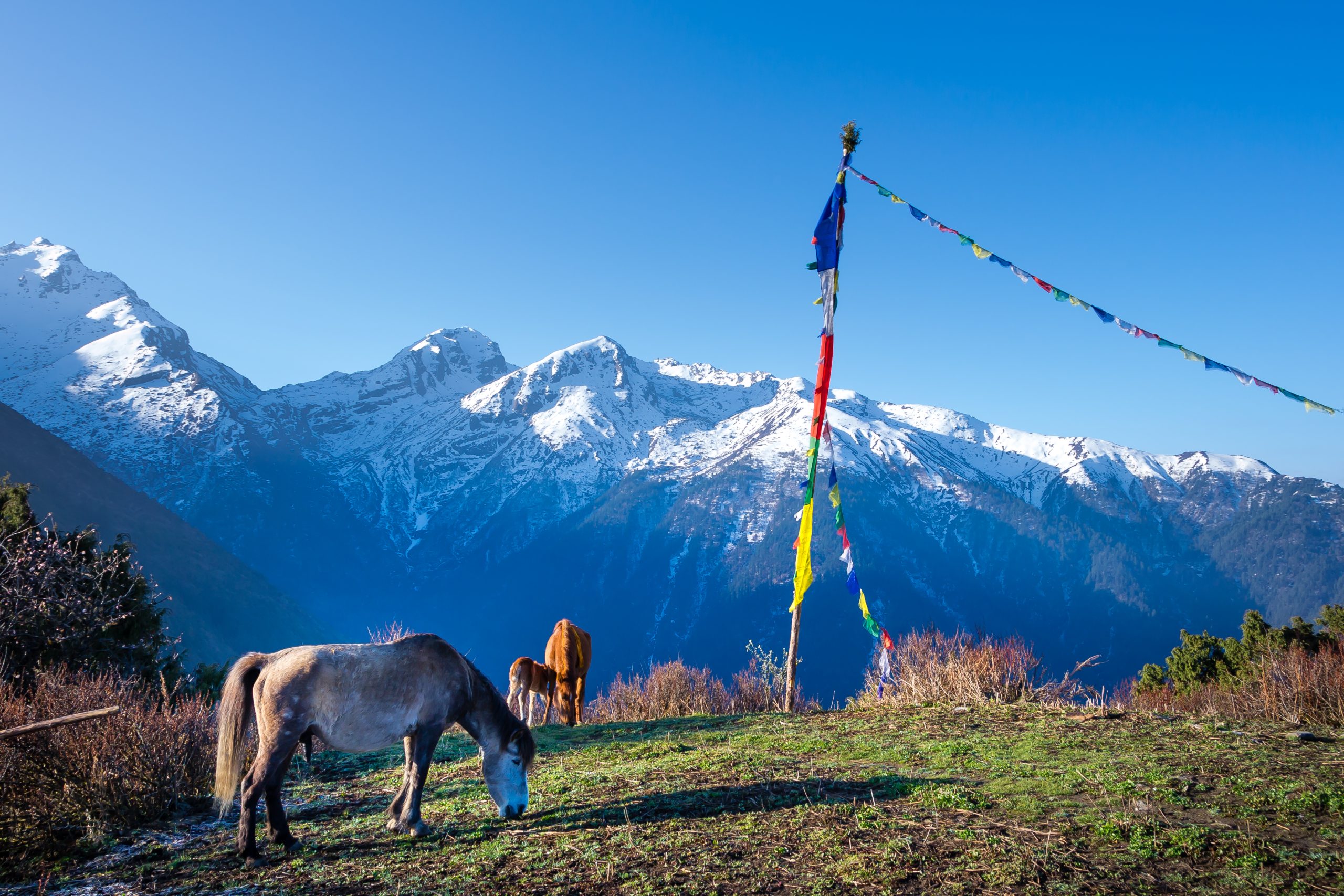
From the Lama Hotel, we trek for approx. 6 hours above the Langtang Khola. We then trek to Langtang Lirung. Following the steep path, we reach at Ghoda Tabela (3000m), a farmhouse of horses and donkeys used for transportation purposes. On the way there is a checkpoint. A beautiful pastureland where we can see Yaks grazing and resting will be on our way. Moving on we see Tamang households, mills and Buddhist flags and prayer wheels. As we walk ahead, we get into Langtang Village (3500m). The Langtang Village, lying at an elevation of 3,400 meters, is a thriving community of teahouses sitting in a bowl and is a haven that is situated on a narrow section of a gorge. But it is not our destination so we move ahead and then reach to Mundu where we spend our night.
Overnight Stay at the Guesthouse, Breakfast, lunch and dinner included.
6
Day 6: Hike from Mundu to Kyangjin Gompa
Having breakfast in the village, we trek to Sindum then make our way towards Yamphu. We have to cross several bridges and the most prominent is the bridge over Laja Khola River which is a result of glacial ice melt. We trek up and see the beautiful Kyanjin Gompa. Flowing of ice through the Langtang Lirung is so dramatic and exciting. We get surrounded by mountains along the way to Kyanjin Gompa. After Kyanjin Gompa, you would be hiking to Kyanjin RI (4773m) and trekking back to the Kyanjin Gompa. Kyanjin Gompa is quite fascinating. The Kyangjuma Gompa is decorated with fluttering flags and a magnificent wall of Himalayas. It is located at the foothill of the Langtang Lirung. The open expanses of green land and huge molding brown hills with herds of yaks and goats scattered around its acreage presents a sight that transports trekkers into a land that makes for a fairytale setting. The hills are also a home to various huge wild beehives hanging from cliff frontiers and crevasses, and the area is a beautiful presentation of a Sephardic life of the people.
Overnight Stay at the Guesthouse, Breakfast, lunch and dinner included.
7
Day 7: Acclimatization Day - Explore Kyangjin
This day is the major highlight of the LGH Trek as we spend the day relaxing and touring the traditional Kyanjin Gompa. Kyanjin Gompa is one of the oldest Gompas of the region, probably built around the sixth century. Kyangjuma Gompa is decorated with fluttering flags and a magnificent wall of Himalayas. We make ourselves busy in visiting and exploring the monastery and visiting the cheese factory where we can taste the delicious Yak cheese. Then we resume our hike for 7 hours towards the highest point Chorkari RI (5050m) to see the amazing Langtang peak and get mesmerized in its ethereal beauty. Over 10 mountain peaks above 6000 meters can be seen from here. Moving on, we walk back to the village where we spend the night.
Overnight Stay at the Guesthouse, Breakfast, lunch and dinner included.
8
Day 8: Kyangjin Gompa to Lama Hotel
Today, we trek down back to the Lama hotel and it takes 5-6 hours of walk. The trail gets steep so we need to be careful. We stop by the Langtang village just to watch its beauty.
Overnight Stay at the Guesthouse, Breakfast, lunch and dinner included.
9
Day 9: Lama Hotel to Thulo Syabru
We make our way from Lama Hotel to Syabru Bensi. This too is an easy trek downwards for about 5-6 hours. We enjoy the spell bounding view along the way.
Overnight Stay at the Guesthouse, Breakfast, lunch and dinner included.
10
Day 10: Thulo Syabru to Sing Gompa
Tamang women in traditional dress
We take the wide trail and climb up to Dimsa village and then the trial continues less steep path through rhododendron, hemlock and oak forests up to Shin Gumba. We enter the area surrounding the Tamang Heritage Trail, where you can find the members of this ethnic group with Tibetan roots and pass through the village of Thuman and the hilly terrain of Nagthali. On the way of your trek you will see fantastic views of Langtang Himal and Langtang valley.
Overnight at guesthouse, breakfast, lunch and dinner included.
11
Day 11: Sing Gompa to Gosaikunda
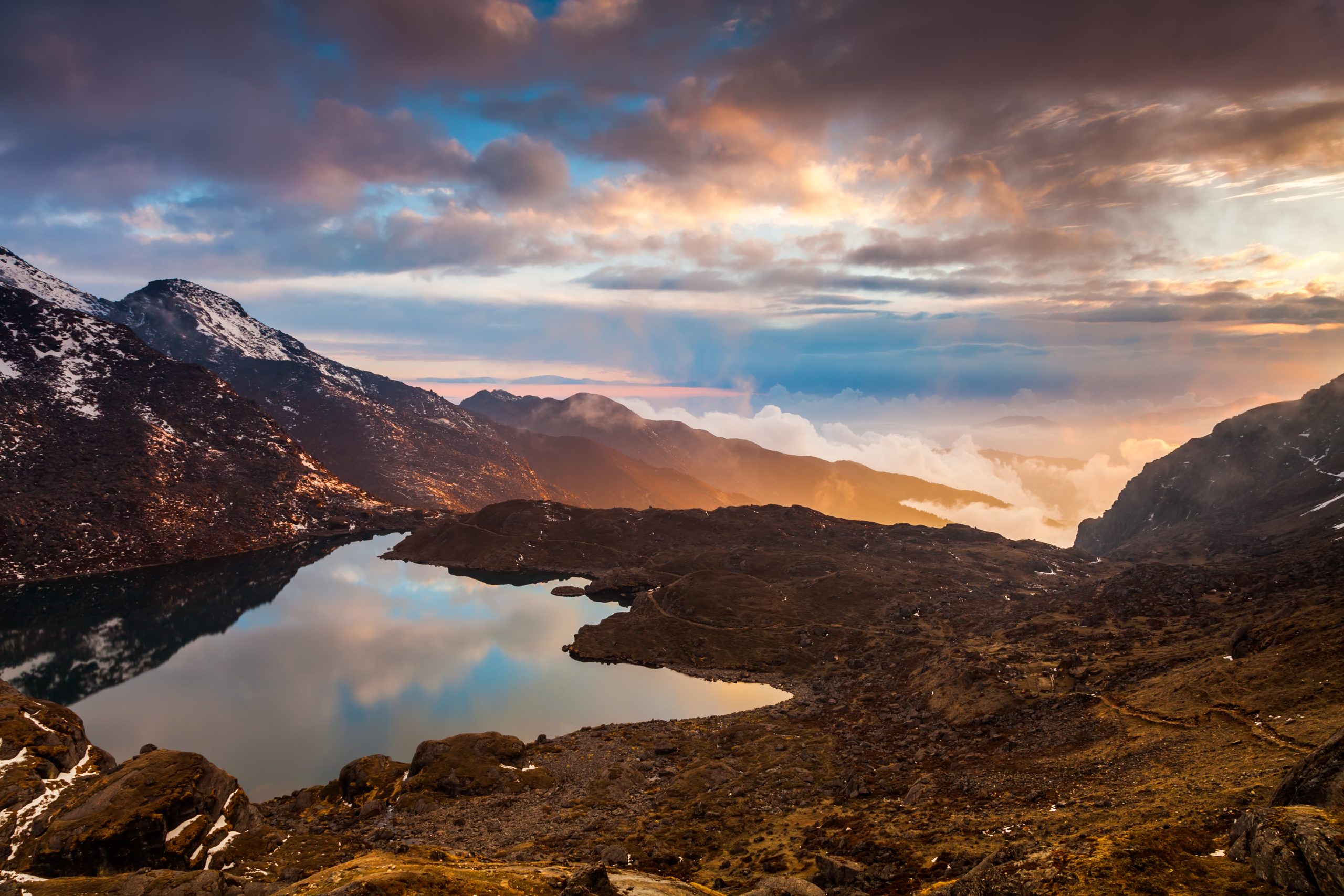
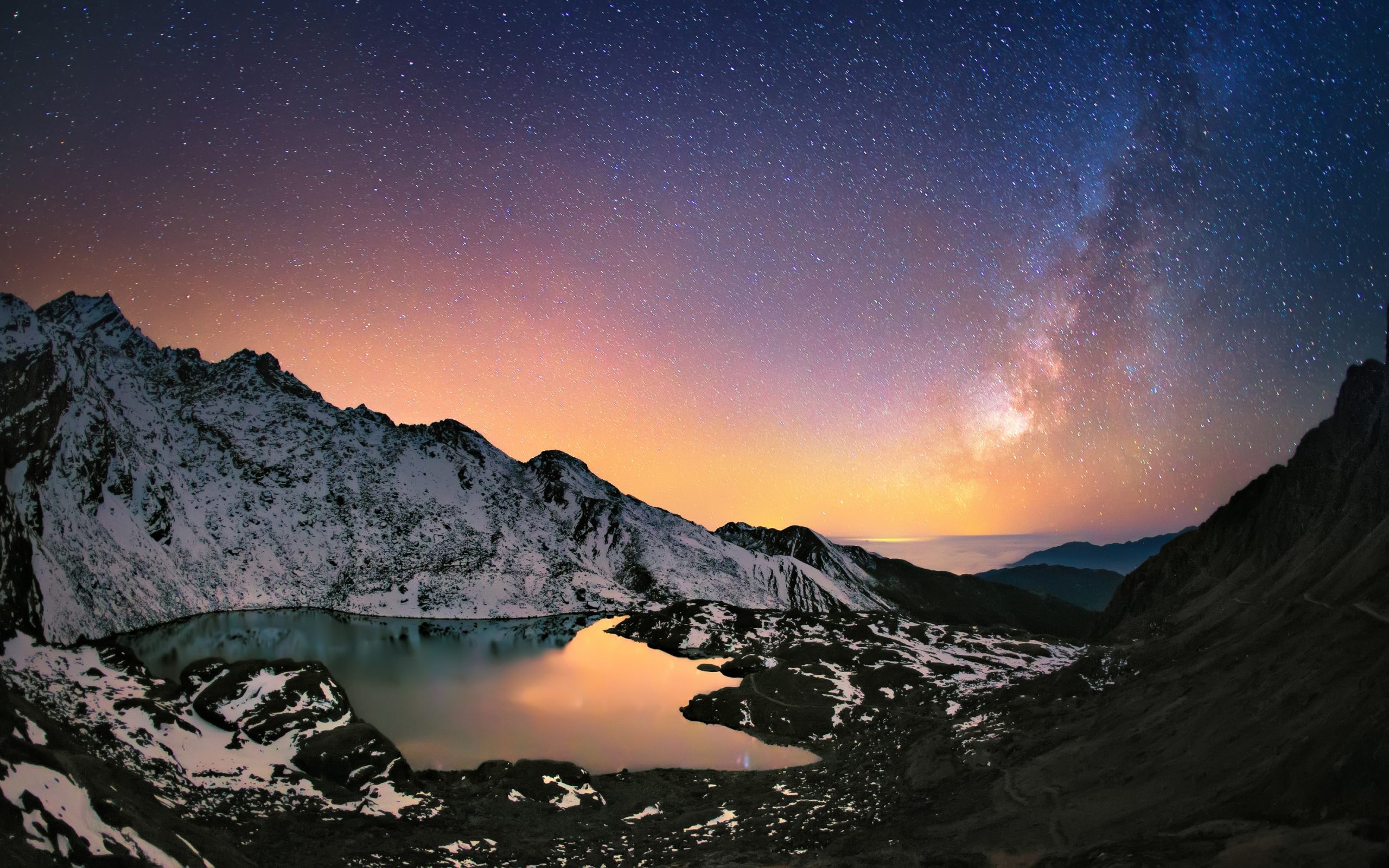
We steadily climb up to Laurebinayak pass and reach to the top of Laurebinayak that gives you an exotic feeling. We goon following a rugged trail watching and enjoying the dramatic views to the Manaslu range, Ganesh Himal range, Tibetan peaks and Langtang Lirung. On a clear day, even the Annapurna range can be seen rising up behind. We pass few huts in the high pasture of Laurebinayak, cross a small ridge and get the first glimpse of the holy lake - Gosaikunda. There are about a dozen lakes in the Gosainkunda Basin but Saraswatikunda, Bhairab Kunda and Gosainkunda are the main ones. According to legend Gosainkunda was created by Shiva when he pierced a glacier with his trident to obtain water to quench his thirst after drinking poison that threatened to destroy the world.
Overnight at guesthouse, breakfast, lunch and dinner included.
12
Day 12: Gosaikunda to Ghopte
Cross back over the high Laurebina Pass and trek toward Ghopte along the north side of the lake. You'll pass some smaller lakes and lodges on the way as you enter the Helambu region. Make sure to enjoy the excellent views of the Tadi Khola Valley to the south. Spectacular views of Manaslu and the Ganesh Himal are seen at the back. We then make a steep descend to camp near Ghopte.
Overnight at guesthouse, breakfast, lunch and dinner included.
13
Day 13: Ghopte to Melamchi Gaon
We move down through a forest and climb a dry river-bed up to arrive at a Kharka that is surrounded by rhododendron forest. We again climb through the forest to reach the village Tharepati. From the ridge, above the village, gives you a marvelous view of the Jugal area. Then we pass the village and enter into forest area, andthen descend to Melamchi River and then Malemchigaon.
Overnight at guesthouse, breakfast, lunch and dinner included.
14
Day 14: Melamchi Gaon to Tarkegyang
Today, we get chance to watch and feel the Sherpa cultural at Helambu Region. We walk up to Tarkeghyang where you can enjoy with Sherpa culture, tradition and monasteries. The stone houses are close together with narrow alleys separating them.
Overnight at guesthouse, breakfast, lunch and dinner included
15
Day 15: Tarkegyang to Sermathang
While crossing a small forest, we get the view of beautiful villages of Helambu region. The trail makes a sweep around the wide valley and then to Parachin and at the last Sherpa village called Gangyul. The people of this village practice Drukpa Kagyu Buddhism, the same as the national religion of Bhutan.You can have impressive views of the Dorje Lhakpa peak and the Panch Pokhari lakes. You might also catch a glimpse of Jugal Himal to the northeast.
Overnight at guesthouse, breakfast, lunch and dinner included.
16
Day 16: Trek to Melamchi Bazaar - Return to Kathmandu
We take a short walk down to Melamchi Bazaar, where the Melamchi Khola and Indrawati Khola rivers join, which is also full of Sherpa people. From Bazzar we catch transport to return back to Katmandu.
Overnight at hotel, breakfast and lunch included.
17
Day 17: Depart Kathmandu
Enjoy breakfast at your hotel and spend the morning relaxing. If you'd like, perhaps head out to do some last minute souvenir shopping. Then get ready to make your way to the airport to catch your flight home. Our representative will take you to the airport 3 hours prior to your flight. We bid farewell as you take heaps of memories and happiness back home. Your Trek in Nepal ends here.
Breakfast included.

 11 Days / 10 Night
 Max People : 1
 Langtang National Park, Himalayan region