Tour Plan
1
Day 1: Welcome to Kathmandu!
Whatever time you arrive at the Tribhuwan International Airport, you will be welcomed by one of our airport representatives. He will help you get transferred to your Hotel. There are no planned activities for the day, so you may check into your Hotel and get rid of jet lag. Tour plans and programs will be provided to you later.
Overnights stay at the Hotel in Kathmandu.
2
Day 2: Explore Kathmandu
Kathmandu valley Sightseeing tour will start early in the morning. The holy Pashupatinath temple will be our very first visit. Dedicated to Lord Shiva, Pashupatinath is one of the four most important religious sites in Asia for devotees of Shiva. Built in the 5th century and later renovated by Malla kings, the site itself is said to have existed from the beginning of the millennium when a Shiva lingam was discovered here. It lies on the banks of the Bagmati River and is one of the most revered holy sites of the Hindu people. The Pashupatinath is built in the pagoda style architecture and contains many smaller shrines outside the main temple as well. It is also the cremation site of many hindu people and sometimes, it can be observed.
The nest site of the tour is the holy Bouddhanath stupa. The Buddhist stupa of Boudha Stupa dominates the skyline; it is one of the largest unique structure's stupas in the world.The influx of large populations of refugees from Tibet has seen the construction of over 50 Gompas (Tibetan convent) around Bouddhanath. The Stupa is on the ancient trade route from Tibet which enters the Kathmandu Valley by the village of Sankhu in the northeast corner. Tibetan merchants have rested and offered prayers here for many centuries. When refugees entered Nepal from Tibet in the 1950s, many decided to live around Boudhanath. The Stupa is said to entomb the remains of Kassapa Buddha.
The next site, in the tour, is the Kathmandu Durbar Square. It is known as the Hanuman Dhoka Durbar Square, a name derived from a statue of Hanuman, the monkey devotee of Lord Ram, at the entrance of the royal palace. The Durbar at the Durbar square was the royal Nepalese residence until the 19th century and was where important ceremonies, such as the coronation of the Nepalese monarch, took place. The palace is decorated with elaborately-carved wooden windows and panels and houses the King Tribhuwan Memorial Museum and the Mahendra Museum are located here. Time and again the temples and the palaces in the square have gone through reconstruction after being damaged by natural causes or neglect. Presently there are less than ten quadrangles in the square. On 25 April 2015, an earthquake with an estimated magnitude of 7.9 hit the region and severely damaged the Square, reducing several buildings to rubble. The oldest temples in the square are those built by King MahendraMalla (1560–1574). They are the temples of Jaggannath, KotilingeswaraMahadev, Mahendreswara and the Taleju Temple. More and more temples and statues were added to the Square under different ruling kings over the time. It is one of the most architecturally intricate showcases of Nepali art and the unique Newa architecture.
Then finally, the last site of the tour will be the Swayambhunath Stupa- an ancient religious architecture at the top of a hill in the Kathmandu Valley, west of Kathmandu city. Swayambhunath is probably the most sacred among Buddhist pilgrimage sites especially for Tibetans and followers of the Tibetan Buddhism. We were breathless and sweating as we stumbled up the last steep steps and practically fell upon the biggest vajra (thunderbolt scepter) that I have ever seen. Behind this Vajra was the vast, round, white dome of the stupa, like a full solid skirt, at the top of which were two giant Buddha eyes wisely looking out over the peaceful valley which was just beginning to come alive. The complex consists of a stupa, a variety of shrines and temples, some dating back to the Licchavi period.
After visiting each site, we will head back to the Hotel.
Overnights stay at the Hotel in Kathmandu. Breakfast included.
3
Day 3: Fly from Kathmandu to Nepalgunj
We take an early flight to Nepalgunj first. Nepalgunj is a steaming hot in summer and too cold in winter city located in South Western Nepal, in the lowlands of Terai. Indian is just 8 km away from Nepalgunj. Cycle rickshaw, electic rickshaw and horse carts are the main means of transportation. Bageswari temple is one of Nepal’s most important Hindu temples and is worth to visit.
Overnight at hotel, breakfast included.
4
Day 4: Fly to Simikot
It takes 60 minutes to complete flight from Nepalgunj to Simikot which covers a distance of 208 kilometers. Locals welcome travelers with a white silk scarf and with three blobs of butter, which is highly symbolic in Tibetan rituals. Simikot is situated at an altitude of 2910 metres from sea levels, is administrative headquarter of the humla district which falls within karnali Zone,mid western region, Nepal. It is the gateway for the Mt .Kailash, Western Tibet and Mansarovar. . A mix of local Humla and Tibetan culture provides endless and fascinating opportunities for exploration. The climate of Simikot is very pleasant & comfortable. During the winter, there can be a snowfall, but rest of the year the temperature is mild.
Overnight at hotel, breakfast included.
5
Day 5: Simikot to Dharapori
Today we trek for about 4-5 hours. At first we climb for half an hour to cross a pass then on a long steep descent, move through pine forests, and pass through a few villages and finally reach Dharapori where we select a camping site near the Karnali River.
Overnight at camp, breakfast included.
6
Day 6: Dharapori to Kermi
Karnali River would be our friend because we follow the river as move towards our destination. The way the river winds, we move on the winding route,sometimes high on the slope, with the river far below y us, and sometimes dipping back down so that the trail is almost with the level of the water. Sometimes we move through narrow gorges with high rocky slopes. Then we walk along the fields of mainly barley, buckwheat, rice, and potatoes.
In the afternoon, we reach at the two natural hot springs. We take rest and get relaxed at the springs. We then move ahead and step into an important Kermi village. It is a small agricultural village and is pure Buddhist village on the trail. There are two interesting monasteries close to Kermi: Laikyo Gompa and Lhundrup Choeling Gompa.
Overnight at hotel, breakfast included.
7
Day 7: Kermi to Yalbang
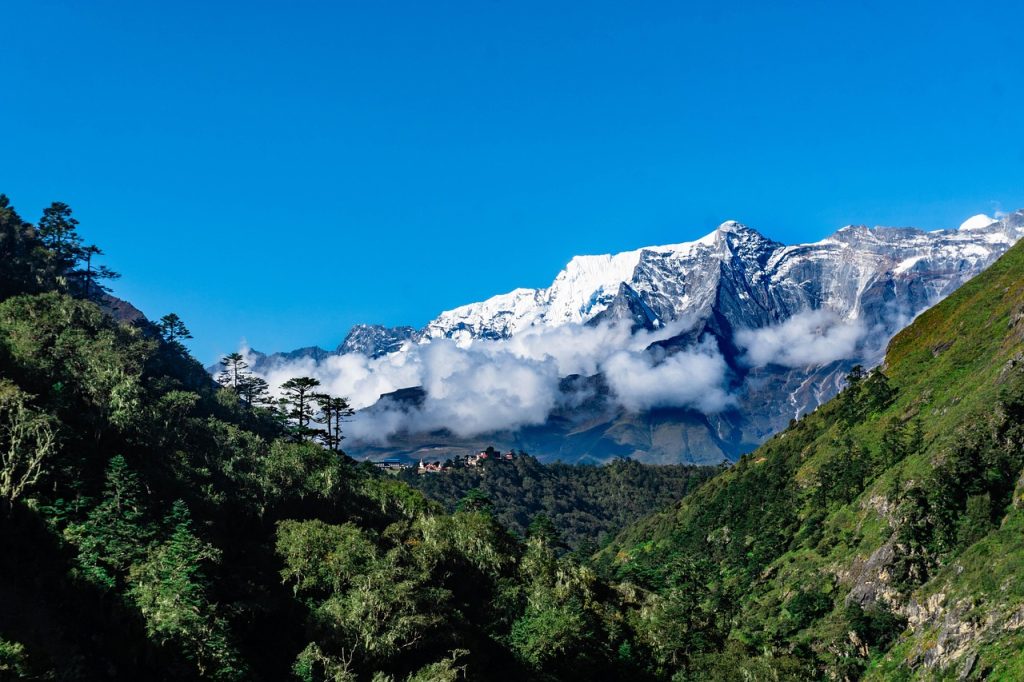
The Namkha Khyung Dzong Monastery is the biggest in the region and houses 130 monks, along with a school and a clinic
Today's the trail is almost plain and passes the fields planted with barley and buckwheat. We cross a small pass and descend down to the Sali River and cross it via suspension bridge made up of iron. The trail goes through beautiful pine forests and below it flows the emerald green Karnali River that can be seen from the route. On the way, we may meet caravans of mules and dzopas (a crossbreed of yak and cow) carrying goods for the trade. The travelers/traders are mostly from Simikot and the Nyinba Valley to the east of Simikot. They move to and fro to Taklakot, just across the border with Tibet, to buy and sell goods for trading.
After 5-6 hours of trekking, we reach a beautiful village. Above the village, there is a beautiful monastery: the Namkha Khyung Dzong Monastery which is the biggest monastery in the area. There is a huge stone near by the monastery carved with Tibetan mantra. Buddhist monk explains about it and escorts around. They also invite for tea upstairs. You can attend the Buddhist prayer ceremony which is performed daily at 7 am and 4 pm.
Overnight at hotel, breakfast included.
8
Day 8: Yalbang to Tumkot Khola
At first we ascend high above the Karnali River and cross the small village named Yangar. The path, from the village, moves uphill, and downhill. Some parts of the path are spectacularly carved out of the rocks and make you feel as if you are walking through tunnel. Then we move through the big pine trees and then smaller bushes. We cross the Karnali River via suspension bridge. Then the path climbs high above the Karnali River and along the upper side of a deep gorge. Below, you can see the emerald green Karnali River. On the way we may encounter large caravan of sheep carrying salt. It pushes you back to the history - a way of an old trade that still exists today. Muchu village is the next village where we step in. Actual village of Tumkot is 20 minutes south of the main trail which is close to the campsite and village lies near the Dhungkar Choezom Monastery, one of the most important Sakya monasteries in the Tibetan region.
Overnight at camp, breakfast included.
9
Day 9: Tumkot to Thado Dunga
We head to Thado Dhunga from Tumkot. It takes nearly 7 hours to reach there. As we move ahead, the trail becomes more rockier and dirty as well. Then we cross a small village called Pani Palwang where there are a couple of tea stalls. It’s a nice place to have cup of tea and lunch. We pass the next village called Yari and finally Thado Dhunga for overnight stay.
Overnight at camp, breakfast included.
10
Day 10: Yari to Hilsa via Nara La Pass
Today, we cross the Nara La pass at 14,000 ft (4,330 m). It is tiring and a long climb but the views that you receive are your reward! As the trail climbs, the landscape gets more desolate. The land looks dry and barren. You won't be able to see trees and the landscape looks more and more like Tibet. On the way you may meet large caravans of mules or yaks carrying salt orgoods for trade. We pass few teahouses at Tado Dunga. The trail becomes steeper and steeper and steeper.
Two hours of walk from the village takes ustothe pass. We cross a few big tents (these are tent hotels, serving foods and drinks). You can see the Nara La pass in the distance, but due to the altitude, it's still a hard climb to get there. You will recognize the pass by the pile of stones (it brings good luck to add one!) and the strings of Tibetan prayer flags, carrying the prayers far away with the strong wind. You have breathtaking views ahead into Tibet and at back Yari far below.
You find yourself surrounded by barren mountains in different colours. From the pass, it’s a long descent to Hilsa, close to the border with Tibet.
11
Day 11: Hilsa to Manipeme
Hilsa is the nearest place to Tibet. During the high season, you can see thousands of Indian pilgrims crossing the border towards Mount Kailash in Tibet. Mt Kailash is taken as holi place for Hindus. The prayer flags are commonly seen strung up in the Himalaya. It is believed that the strong passing winds carry away prayers along with the threads of the weathered flags.
After breakfast, we cross the Humla Karnali River via the suspension bridge and immediately turn north along the newly constructed road towards Limi Valley. To cross the Nepal-Tibet border is strictly prohibited. This valley is famous for snow leopards and bharal-Himalayan blue sheep. After trekking for 4-5 hours, reach the camp spot at Manipeme at an elevation of 12,900 ft (3,930 m). The camp gets its name from the Mani Mantra engraved on a large rock.
12
Day 12: Manipeme to Til Village
Today's trail is short but it is tough and takes about 7 hours. We move up and down on dry land. We walk along the Trans Himalaya Dread Path, It is used for trading. Caravan can be seen beautifully moving for the trade. There are three villages in the Limi valley- Til, Halji, and Jang. Til is situated at approximately 13,500 ft (4,100 m) and is surrounded by barley fields at the western side of the village. It is the closest village to the Tibet-China border and is the smallest village among the three settlements. There are around 30 families living here. On the right side of the village, you'll find the300-year-old monastery - Kunzum Do-Nag which is worth paying a visit.
13
Day 13: Til village to Chagzur hot springs via Halji
Today’s trekking begins with a downhill walk to reach Tiljung village. Just below Tiljung is the Tagtsi Khola, the main tributary of Karnali River, which flows from the east along the Jang and Halji villages towards Til. From Tiljung, we cross the suspension bridge over the river, and then proceed right. Then follow the Tagtsi River into the narrow valley towards the east and we reach another bridge over the same river. We cross the bridge too and turn to the left to reach at the beautiful village Halji. It is the biggest and most important village in Limi valley, and at its center located 800-year-old Rinchhen Ling Gompa monastery which is a must to watch at. Visit the monastery and turn east, walking on the nice wide trail past the beautiful Buddhist entrance gate and Mani walls. From there we move ahead until we reach the village called Jang at 12,900 ft (3,930 m), which boasts a 250-year-old monastery in the village. From Jang, one hour trek takes us to our destination: the Chagzur hot springs.
14
Day 14: Rest day at Chagzur (Tashi Thang) Hot Spring
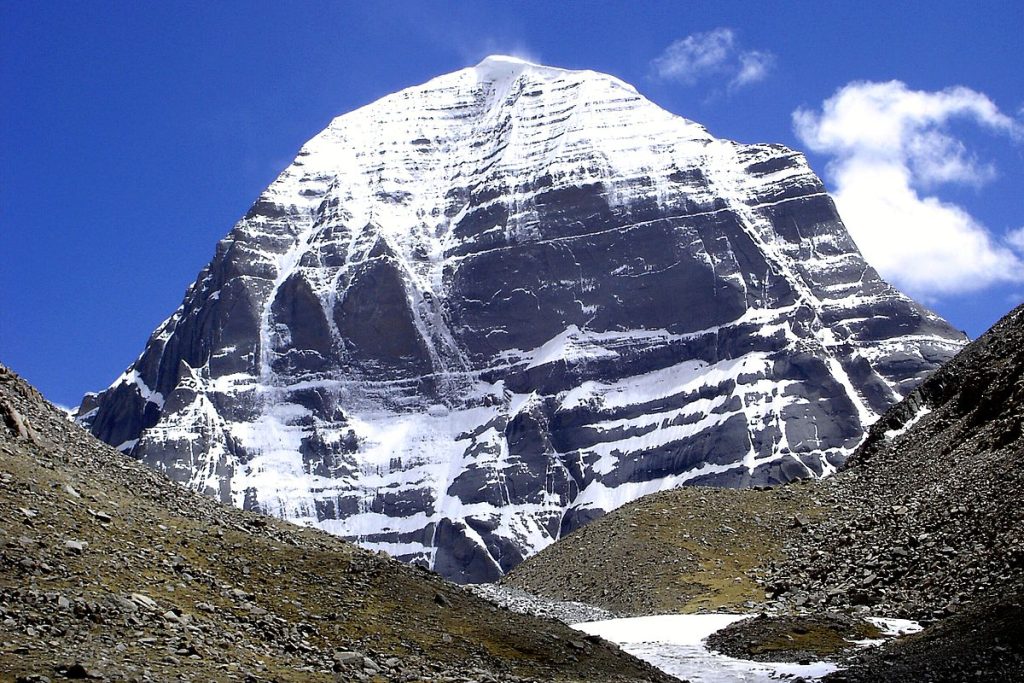
Today is your best and rest day of our trek. We can relax in the natural hot-spring taking bath that takes away all our tiredness and we have an opportunity to watch beautiful panoramic view of the Mt. Kailash and Holy Lake Manasarovar in Tibet from Lapcha Syar 16,000 ft (4,900 m). To see the panoramic view of Kailash and Manasarovar, we can hire a truck for to and fro which takes about 5 hours.
15
Day 15: Trek to Jade/Nyalu Base Camp
We leave luxury hot springs of Chagjur and move to Tagtsi. Caravan trails of Humla-Manasorover and Humla-Limi might meet us somewhere on the way. The new settlement named Tugling has VHF telephone service and a restaurant run by Limi people on our route.
There are two routes from Tugling to Nyalu base camp: one that is shorter is not so beautiful but the longer one that goes via Tagtsi is much more beautiful. Just after crossing the Tagtsi bridge on our right, we can see one of the ruined villages called Limi. It is the oldest village in the Limi valley, known as Tshamdo or Zambuk (also known as the ruined village of Lama Palya).
From Zambuk we walk ahead and need to cross Nyingchhu River, which enters into Tshomgo Lake. Tshomgo Lake and the stream of Talung meadows are so beautiful that everyone halt to watch their beauty. You can also see the camp of Limi and Humli shepherds and yak-herders at Jade/Nyalu base camp. Today's journey will take approximately 7 hours.
16
Day 16: Nyalu base camp to Sheng Jungma
It takes us about two hours to climb and to reach the top of Nyalu Pass (14,000 ft/ 4,990 m). From the top of the pass we can see several mountain ranges which are awesome. We then step down from Nyalu Pass to a small, beautiful lake: Sheliman Lake (2,570 m).
From Sheliman Lake, we descend towards Tshongsa meadow cross the Tshongsa River, and then through the first vegetation: a rhododendron forest. On the way we get the towered Tshongsa rocks and the beautiful Tshongsi Tsan waterfall (the wild Demon of Tshongsa). We finally reach the pastureland of Sheng Jungma, in the thicker jungle habitat.
17
Day 17: Sheng Jungma to Langdogd Base
From Sheng Jungma we trek to Langdogd Base. We move across the Tshongsa River and then ascend along the left bank of Zhetse River towards the east. We again the same stream to the right. Before crossing the bridge, we visit the summer camp of the Chyadok village herders; witness the beautiful scenery of Zhetse valley and walk to the campsite of the Dinga village herders known as Langdogd Base.
18
Day 18: Langdogd Base to Lekh Dinga
From the campsite, we ascend through the jungle towards Langdogd Pass (4,550 m). From the pass and then steep descend through juniper and birch forests until we reach the Takhor Khola. After crossing the stream and walking for about 1.5 hours, we reach the campsite of Laga Dinga, also known as Lekh Dinga (3,890 m). This is the summer village of Laga Dinga, and it is the autumn trading center for the Limi and southern Humli people. It is a lovely and pleasant place to spend the night.
19
Day 19: Lekh Dinga to Simikot
Today is the last day of our walk. We start your day by passing the villages of Yapka and Tangin on our left and Aul Dinga (Lower Dinga) on our right. We head descending until we reach Yapka Khola (2,600 m). Team crosses the wooden bridge, climbs towards the Thakuri village called Okhreni.
From the village, we walk straight to Simikot Lagna. From the village we can have a beautiful view of Nyinba valley. We walk downhill to Simikot, the district capital of Humla. we take rest at a guest house in Simikot where we will stay at night before continuing your journey back to Kathmandu the next day.
20
Day 20: Flight from Simikot - Nepalgunj – Kathmandu
Early in the morning we fly back to Nepalgunj. Later in the day, we fly back to Kathmandu. Approximately three hours before your scheduled flight, you will be dropped off at the airport for your departure.


 13 Days / 12 Night
 Max People : 1
 Humla district northwestern Nepal